
The Foundation of Themed Environments
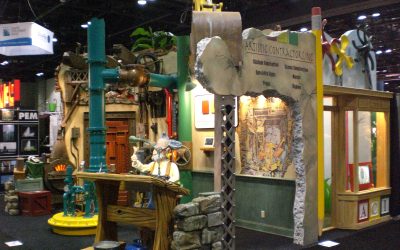
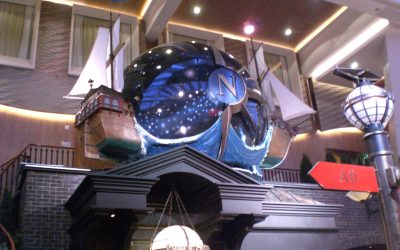
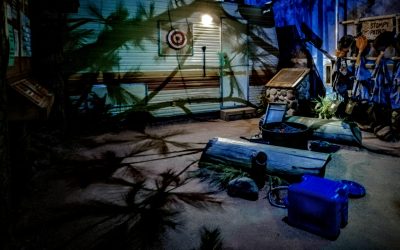
Walk through almost any theme park, aquarium, themed restaurant, or immersive attraction built in the last three decades, and you have almost certainly touched a piece of expanded polystyrene foam without knowing it. The towering fake rock formation beside the water ride, the weathered ship’s hull at the entrance to a pirate-themed restaurant, the massive tree trunk arching over a walkway, the ancient ruin wall at a themed golf course. These structures look like stone, wood, and stucco. Underneath, most of them are foam.
This is not a shortcut or a cheaper substitute for real materials. It is a deliberate, highly refined fabrication discipline, and it is the foundation on which most of the themed entertainment industry is built. Foam carving allows designers to build at a scale, in shapes, and on a timeline that would be structurally and financially impossible using stone, concrete, or wood alone. The reason a themed environment can include a forty-foot rock formation without requiring a crane-assisted masonry crew and a six-figure structural budget is because that formation is very likely a carved and coated foam structure, engineered specifically to be light enough to build economically and tough enough to survive decades outdoors.
This article walks through how the process actually works: the materials, the carving techniques, the structural coating systems that turn soft foam into a surface that can survive weather, guest contact, and time, and why getting each of these decisions right is what separates a themed environment that lasts from one that fails within a few seasons.
Why Foam Became the Foundation Material of an Entire Industry
The appeal of expanded polystyrene, commonly known as EPS foam, for large-scale sculptural and architectural work comes down to a combination of properties that no traditional building material can match simultaneously.
EPS is extraordinarily lightweight relative to its volume, which means enormous forms can be built and installed without the structural engineering, foundation work, and equipment that equivalent stone or concrete construction would demand. It carves easily and quickly with both hand tools and powered equipment, which allows sculptors to move from a rough block to a detailed, finished form in a fraction of the time that carving stone or wood would require. It is dimensionally stable once shaped, holding its form reliably under normal conditions. And it can be finished to convincingly replicate the appearance of virtually any natural or man-made material, from weathered granite to aged wood to coral to ice.
These properties are why foam carving became, and remains, the default construction method for large-scale rockwork, themed architecture, oversized props, and character sculptures across the theme park, aquarium, museum, and themed hospitality industries. When a designer specifies a towering themed rock formation, a foam substrate is very often the practical answer that makes the design achievable within a realistic budget and timeline.
The Carving Process: From Raw Block to Finished Form
Foam sculpture fabrication begins with raw material selection, and this decision has consequences for every step that follows. EPS is manufactured in a range of densities, and the appropriate density for a given application depends on the scale of the piece, the level of surface detail required, and how much structural demand the finished piece will need to withstand before it receives its hard coating.
Lower density foam carves quickly and is well suited to large-scale forms where broad shape is more important than fine detail. Higher density foam holds finer detail and resists compression damage during the carving and handling process, but requires more time and more force to shape. Professional fabricators select density block by block within a single project, using lighter density foam for interior volume and higher density foam for surfaces that will carry the finest sculptural detail.
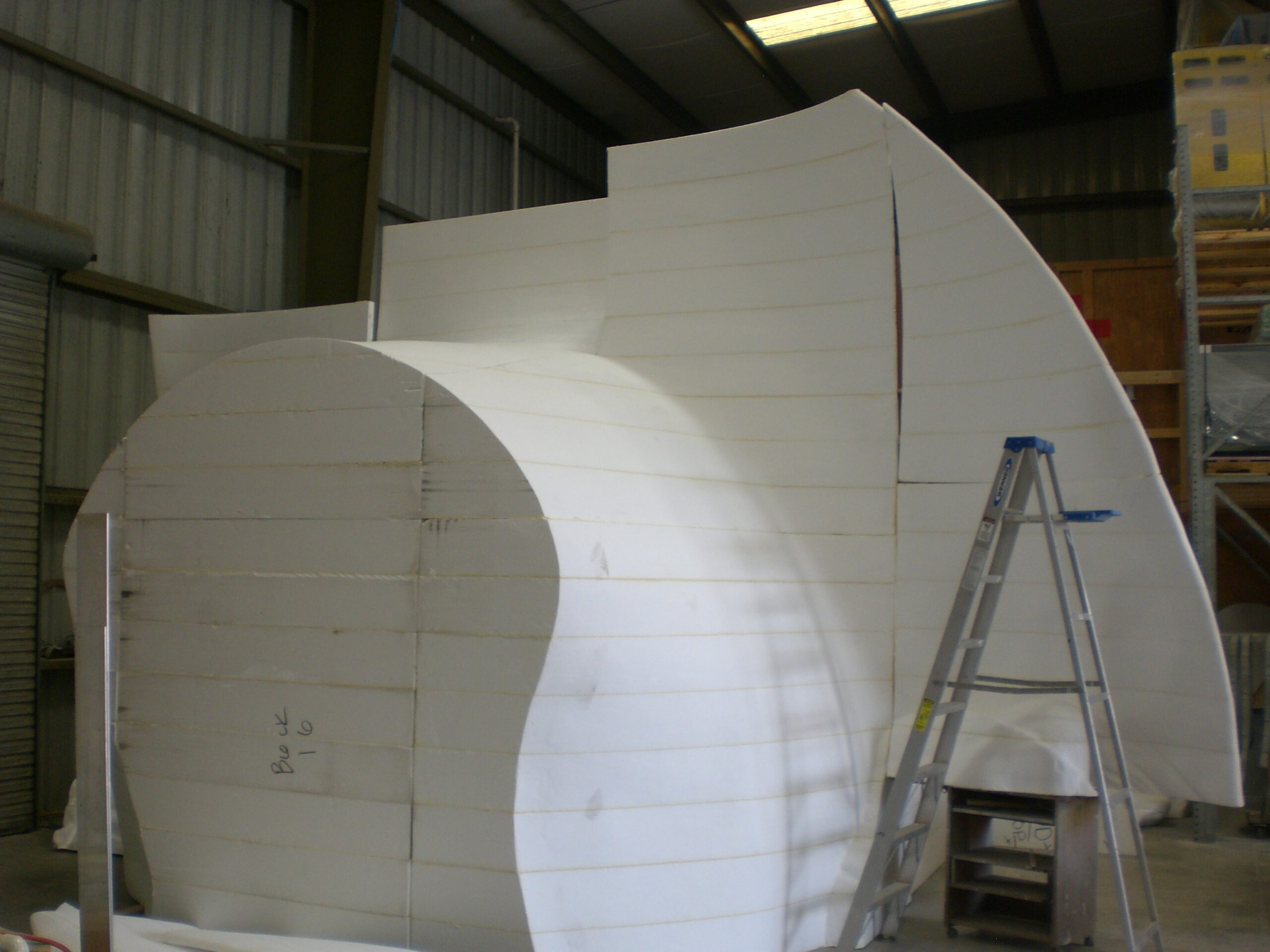
Block size and jointing also matter more than clients typically expect. Large sculptural forms are rarely carved from a single block of foam. They are built up from multiple blocks, laminated together with compatible adhesives before carving begins, in a configuration planned specifically to minimize visible seams once the piece is coated and finished. Getting this lamination and jointing plan right at the outset avoids weak points in the finished structure and prevents visible seam lines from telegraphing through the final coating and paint layers, which would otherwise undermine the illusion the finished piece is meant to create.
The initial rough shaping of a large sculptural form typically begins with hot wire cutting, a technique that uses an electrically heated wire to slice through the foam by melting rather than tearing it. This produces a clean, smooth cut with no dust or debris, which makes it ideal for establishing the broad planes and primary geometry of a piece quickly. For projects with complex or repeatable geometry, CNC foam routing has become the modern standard for this rough shaping stage. A computer-controlled router follows a digital model with extreme precision, cutting complex three-dimensional forms directly from the design file. This is especially valuable for architectural elements that need to match a design drawing exactly, for pieces that require duplication across a themed environment, or for large projects where hand carving alone would extend the fabrication timeline beyond what the project schedule allows.
Once the rough form is established, the detailed sculptural work begins, and this stage remains fundamentally a hand craft regardless of how much technology assists the earlier stages. Sculptors use rasps, files, wire brushes, and sanding tools to refine surface texture, carve in the fine detail that gives a rock formation its geological credibility or a themed tree its bark texture, and correct and adjust the form as the piece develops. This is skilled, patient work. The detail carved into a themed rock face at this stage is what will read, once coated and painted, as convincing natural stone rather than an obviously artificial surface. Sculptors experienced in this craft develop the same eye for natural form that a traditional stone carver develops, studying real geological references and translating that observation into the foam through careful, deliberate tool work.
Armatures and structural reinforcement are integrated during this stage wherever the finished piece will require internal support beyond the foam itself. Large sculptural forms, elements that will bear any guest contact or load, and pieces with cantilevered or overhanging geometry typically require a steel or aluminum internal frame built before or during the carving process, with the foam shaped around and integrated with that structural skeleton. This is one of the areas where structural engineering and sculptural artistry have to work in close coordination from the earliest stages of a project, since an armature added as an afterthought rarely integrates cleanly with a form that was carved without it in mind.
From Soft Foam to Hard Surface: The Structural Coating System
Carved foam in its raw state is soft, easily damaged, and completely unsuited to outdoor exposure or guest contact. The transformation from a carved foam form into a durable, weatherproof, guest-ready structure happens through a layered structural coating system, and this stage of the process is, in many respects, more consequential to the long-term success of a themed environment than the carving itself.
The coating process typically begins with a base sealing layer applied directly to the foam surface. This initial coat serves two purposes: it protects the foam from solvents in subsequent coating layers that could otherwise dissolve the polystyrene, and it begins to establish the surface texture and tooth that later layers will bond to.
Over this base layer, a reinforced structural coating is applied, most often incorporating a fiberglass or synthetic mesh embedded within a cementitious or polymer-modified base coat. This reinforcing layer is the structural heart of the system. It is what transforms a soft foam form into a rigid shell capable of resisting impact, foot traffic in the case of climbable rockwork, and the general wear of an outdoor public environment. The mesh distributes stress across the surface rather than allowing a single point of impact to crack or puncture the coating, and the cementitious or polymer base provides the rigidity and abrasion resistance that raw foam cannot offer on its own.
This general approach shares its underlying engineering logic with Exterior Insulation and Finish Systems, commonly known in the construction industry as EIFS, which similarly bond a reinforced base coat over a foam insulation layer to create a rigid, weather-resistant exterior finish on commercial and residential buildings. The construction industry has developed detailed technical standards for exactly this kind of assembly, and the installation guidelines published for EIFS systems provide a useful technical reference for the underlying principles that also govern structural coatings on themed foam sculpture, particularly around vapor management, joint treatment, and the critical importance of never trapping moisture beneath the coating layer.
That moisture management point deserves particular attention, because it is one of the most common failure points in foam-based construction of any kind. Foam itself is not vapor permeable in the way that some traditional building materials are, which means any coating system applied over it has to be engineered as a complete, continuous barrier rather than a surface treatment that assumes some residual breathability. A coating that traps moisture against a foam substrate, whether from a poorly sealed joint, a puncture in the reinforcing layer, or an improperly cured base coat, creates conditions for the coating to blister, delaminate, or fail entirely, often in locations that are not visually obvious until the damage has already progressed significantly.
For themed sculpture and rockwork specifically, polyurea and polyurethane coating systems have become increasingly favored as a final structural layer, particularly for elements that will see direct guest contact or challenging outdoor exposure. These coatings cure extremely quickly, often within seconds of application, forming a tough, seamless, and highly abrasion-resistant shell directly over the foam or the reinforced base coat beneath it. Their rapid cure time and exceptional durability make them particularly well suited to climbable rockwork, high-traffic themed pathways, and any surface where the finished piece needs to withstand sustained physical contact from millions of guests over its operational life.
Texture, Color, and the Final Illusion
Once the structural coating has cured, the sculptural work shifts from engineering to artistry again. This stage is where a technically sound but visually generic hard-coated form becomes a convincing, specific, believable representation of stone, wood, coral, or whatever material the design calls for.
Texture at this stage is typically built up through a combination of hand-applied technique and tools specifically developed for replicating natural surfaces: stippling, dragging, and carving into the final coating layer while it remains workable, or applying additional textural coats to build up the fine surface irregularity that reads, from a guest’s viewing distance, as genuine geological or organic texture. This is deeply skilled work, and it is where the difference between an ordinary themed environment and an exceptional one becomes most visible. Real rock is never a single uniform color or texture. It carries mineral variation, weathering patterns, moss and lichen growth in shaded areas, and water staining along drainage paths. Reproducing this convincingly requires the same close observation of natural reference that the original carving work demanded, applied now through paint and texture technique rather than through the removal of foam material.
Final color is achieved through multiple layered coats of paint, typically beginning with a base color that establishes the overall tone of the piece, followed by successive layers of color variation, highlighting, and shadow work applied to bring out the sculpted texture and create the specific visual character the design calls for. This finishing work is where the piece is unified visually with the surrounding themed environment, whether that means matching a specific rock formation color palette across dozens of individual sculptural elements, or coordinating a foam-carved architectural feature with adjacent surfaces built in entirely different materials so that the two read seamlessly as a single environment.
Safety Considerations in the Carving Process
Foam carving, for all its craft and artistry, is also a process that generates specific occupational hazards that professional fabrication shops manage carefully. Hot wire cutting and any heat-based shaping method produces fumes as the foam melts, and cutting or sanding raw EPS produces fine particulate that should not be inhaled over sustained periods. Professional shops address this through proper ventilation systems, appropriate respiratory protection for sculptors working with foam for extended periods, and dust collection systems integrated into CNC routing equipment specifically to capture particulate at the source rather than allowing it to accumulate in the workspace.
The Occupational Safety and Health Administration’s guidance on respiratory protection and general workplace air quality standards inform how a professional shop structures its ventilation and personal protective equipment protocols around foam fabrication work. This is not a peripheral concern. A shop that fabricates foam sculpture at any meaningful scale is, in effect, running a light industrial operation, and treating it with the same seriousness as any other fabrication trade, in terms of both safety and craft, is what separates a professional operation from a hobbyist one.
Why This Process Demands Genuine Craft, Not Just Material Knowledge
It would be a mistake to characterize foam carving and structural coating as a purely technical or industrial process. At every stage, from the initial carving through the final paint layers, the quality of the finished piece depends on artistic judgment as much as material science. A hot wire cutter and a CNC router can establish the rough geometry of a themed rock formation with mechanical precision, but no machine determines where the natural fracture lines of that rock formation should fall, how weathering would have shaped it over centuries, or how light and shadow should play across its surface to convince a guest, at a glance and without conscious analysis, that they are looking at something real.
This is why experienced sculptors and finishers remain the irreplaceable core of foam fabrication work, regardless of how much the supporting technology has advanced. The tools have changed considerably over the past several decades. The underlying craft, close observation of natural form translated through skilled hands into a convincing artificial surface, has not.
At Artistic Contractors, foam carving and structural coating form the technical foundation beneath a substantial portion of our custom sculpture and prop fabrication work, and the same principles apply whether the finished piece is a themed rock formation, an oversized character sculpture, or an architectural feature integrated into a larger immersive themed environment. Getting this process right, from material and density selection through carving, structural coating, and final finish, is what allows a themed environment to be structurally sound, visually convincing, and durable enough to remain in service for decades rather than seasons.
If your project calls for large-scale themed sculpture, rockwork, or architectural elements built to last outdoors under real guest use, we would welcome the conversation.