
What Theme Parks and Resorts Demand That Standard Construction Doesn’t Provide
By Artistic Contractors Inc. | Atlantic Beach, Florida
A themed environment built to standard commercial construction tolerances will look impressive on opening day. The question that matters to theme park operators, resort developers, and entertainment venue owners is what that same environment will look like in year five, and whether it will still be standing, structurally sound, and visually intact in year fifteen.
This is the question that separates themed environment fabrication from ordinary construction. A commercial building is generally evaluated against a maintenance and lifecycle standard that assumes indoor climate control, limited direct sun exposure, and a controlled level of physical contact from occupants. A themed environment at a major attraction is evaluated against none of those assumptions. It sits outdoors, often in direct sun for ten or more hours a day. It is touched, climbed on, leaned against, and photographed at close range by millions of guests every year. In coastal locations, it is subjected to salt air that accelerates corrosion and coating failure at a rate inland construction never encounters. And unlike a commercial building that can close for renovation, a themed attraction is frequently expected to remain in continuous operation while still looking, a decade later, the way it looked on its first day.
This article examines what that standard actually requires: the coating systems that survive Florida and Caribbean climates, the structural considerations for interactive and climbable elements, the accessibility requirements that apply specifically to themed environments, and the maintenance planning that has to be designed into a structure before it is ever built.
Why Standard Construction Materials Fail in Themed Environments
Most commercial exterior coatings and finishes are specified against general-purpose weathering standards. Those standards were not written with South Florida, the Caribbean, or similarly aggressive coastal climates in mind, and materials that perform adequately in a moderate climate can fail within a few years in these conditions.
The combination of intense ultraviolet radiation, sustained high humidity, salt-laden air, and frequent heavy rain creates one of the most demanding natural weathering environments anywhere in the world. The architectural coating industry uses South Florida specifically as its benchmark testing location for exactly this reason. Coatings that survive ten years of continuous exposure on test panels in the Miami-Fort Lauderdale area, angled to maximize sun exposure, have proven themselves against a condition more severe than nearly anywhere else a themed environment might be built.
The mechanism of failure is well understood. UV radiation breaks down the polymer chains in lower-grade coatings and plastics, a process that shows up first as chalking, a powdery surface residue, and later as color fading, cracking, and eventual structural breakdown of the coating layer. Salt air accelerates this process further by settling on surfaces and initiating corrosion in any exposed or under-protected metal, while also degrading coatings that were not specifically formulated to resist salt penetration. Humidity compounds both effects by keeping surfaces damp for extended periods, which promotes mold growth, coating blistering, and loss of adhesion between coating layers and substrates.
For a themed environment, the practical result of these forces is straightforward. A structure finished with standard architectural paint or a general-purpose sealant will show visible degradation within two to four years in a coastal environment, well before a client would reasonably expect to repaint or resurface a major installation. The visual impact this has on a themed attraction is significant. Chalking dulls color intensity across an entire environment. Fading breaks the visual consistency between elements finished at different times. Corrosion staining bleeds through paint from fasteners and structural connections. None of these outcomes are acceptable in an environment where visual impact is the entire point of the investment.
The Coating Systems That Actually Hold Up
Professional themed environment fabrication uses coating and finish systems that are tested and rated specifically for the kind of exposure these structures will see, not general-purpose products selected for cost alone.
Testing protocols exist precisely to separate coatings that will perform from coatings that will not. ASTM International’s accelerated weathering standards, including fluorescent UV-condensation testing and outdoor solar concentrating exposure testing, allow manufacturers to compress years of real-world weathering into weeks of laboratory testing. Roughly two thousand hours of this accelerated testing corresponds to about one year of outdoor exposure in a harsh climate like Florida’s, which means a coating rated for five thousand testing hours has demonstrated performance comparable to two and a half years of continuous exposure, and premium systems are tested well beyond that threshold.
Salt resistance is evaluated separately through salt spray testing, which subjects coated and metal surfaces to continuous saline fog to simulate accelerated corrosion. Entry-level finishes typically fail within five hundred to a thousand hours of this testing. Coatings specified for genuine coastal durability are expected to exceed three thousand hours without visible corrosion or coating breakdown, a benchmark that corresponds to roughly five to seven years of real oceanfront exposure.
In practical terms, this means the material choices for a themed environment are never generic. Aliphatic polyurethane and polyurea coating systems are consistently favored for outdoor themed work because they resist both UV degradation and moisture penetration far more effectively than aromatic alternatives, which discolor and break down considerably faster under sustained sun exposure. Structural metal components are specified in corrosion-resistant alloys, properly primed, and finished with multi-stage coating systems rather than a single top coat, because the additional layers each serve a distinct protective function: corrosion inhibition, UV blocking, and final color and texture.
Fiberglass and composite elements, a mainstay of themed sculpture and prop fabrication, require their own specific finishing approach. The gel coat or paint system applied over a fiberglass substrate has to accommodate the material’s thermal expansion characteristics in direct sun, resist the same UV and salt exposure as any other exterior surface, and in many cases incorporate texture and color that must be matched precisely to adjacent scenic elements finished in different materials. Getting this wrong produces visible mismatches between elements that are supposed to read as a single continuous environment.
Structural Considerations for Interactive and Climbable Elements
Themed environments are rarely look-but-do-not-touch installations. Guests climb on rockwork, lean against themed railings, sit on sculptural benches, and in many attractions are specifically invited to physically interact with elements that were designed to be touched, climbed, or used as part of the experience. This changes the structural engineering requirements substantially compared to a purely decorative installation.
Any element designed for guest contact, and particularly anything designed to be climbed or sat upon, requires a structural load analysis that accounts for concentrated live loads, dynamic loading from movement, and the reality that guests will use a structure in ways the designer did not necessarily anticipate. A rockwork climbing feature has to be engineered to the same structural rigor as a piece of playground equipment, because from a liability and safety standpoint, that is functionally what it is once guests are permitted to interact with it.
This is an area where the themed entertainment industry has converged with formal safety standards developed for adjacent industries. International standards bodies have developed detailed requirements for structures where the public physically interacts with the built environment, covering everything from fall height limitations and structural integrity testing to material specifications and inspection protocols. Standards developed for playground and public play equipment provide a useful and often directly applicable framework for engineering climbable themed elements, since the underlying safety questions, structural capacity, fall protection, material toxicity, and inspection intervals, are functionally identical.
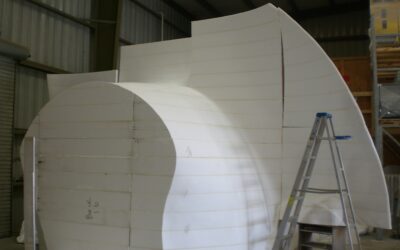
Beyond the interactive elements themselves, structural engineering in themed environment fabrication has to account for constructability from the outset. How will a large sculptural or architectural element actually be assembled on site, what temporary supports are required during installation, and how does the assembly sequence avoid conflicts with other trades working simultaneously in the same space. These are not afterthoughts addressed once fabrication begins. They are engineering questions resolved during design, because a structure that cannot be assembled efficiently and safely in the field represents a serious risk to the project schedule and budget regardless of how well it performs once installed.
Accessibility Requirements Specific to Themed Environments
Accessibility compliance in a themed environment presents challenges that a conventional building rarely faces, because the entire point of a themed environment is often to disguise or obscure the very infrastructure that accessibility compliance requires to be visible and functional.
Ramps, transfer points for ride vehicles, tactile wayfinding elements, and clear accessible routes all have to be integrated into an environment without breaking the illusion the environment was built to create. A themed ramp has to meet the same slope, width, and handrail requirements as any accessible ramp in a conventional building, while also being disguised as a natural rock formation, a themed walkway, or an architectural element that reads as part of the story rather than as a compliance feature bolted onto the side of it.
This requires accessibility to be considered at the design stage, not retrofitted after the visual design is finalized. A themed environment designed with accessible routes built into the story from the beginning integrates ramps as natural pathways, uses themed railings that meet structural and dimensional requirements while reading as decorative elements, and positions accessible viewing areas and transfer points so they feel like a natural part of the guest experience rather than a separate accommodation. Attempting to add these elements after a design is finalized almost always produces a visibly compromised result, where the accessible route stands out as an obvious addition rather than an integrated part of the environment.
Anti-Graffiti and Vandalism-Resistant Finishing
High-traffic public attractions face a maintenance reality that private commercial buildings generally do not: sustained public exposure to millions of visitors annually creates a meaningful risk of graffiti, scratching, and general wear from casual contact that accumulates over time even without deliberate vandalism.
Anti-graffiti coating systems address this directly. These are typically clear, sacrificial or permanent topcoats applied over the finished surface that allow paint, marker, and similar contaminants to be removed with appropriate cleaning agents without damaging the underlying finish or requiring repainting. Sacrificial systems are removed and reapplied periodically as part of routine maintenance, while permanent systems are formulated to withstand repeated cleaning cycles without degrading.
The decision of where to apply anti-graffiti protection, and which system to specify, is made during the design and fabrication phase based on the guest accessibility of each surface. Elements within easy reach of guest pathways receive a different specification than elements positioned at height or behind barriers, because the practical risk profile is genuinely different for each.
Designing Maintenance Access Into the Structure From Day One
The single most consequential decision in long-term durability planning is often invisible in the finished environment: how will this structure actually be maintained once it is built, and has that maintenance requirement been designed into the structure itself.
A themed environment that requires scaffolding, structural disassembly, or extended closure to perform routine maintenance is an environment that will either receive inadequate maintenance because the cost and disruption are too high, or will require expensive specialized access equipment every time a light needs replacing or a coating needs touching up. Neither outcome is acceptable for an attraction expected to operate continuously for a decade or more.
Professional themed environment design addresses this by building maintenance access into the structure from the earliest design stages. This includes concealed access panels sized for a technician to reach mechanical, electrical, and lighting infrastructure without disturbing the surrounding scenic finish, structural pathways that allow safe access to elevated or difficult-to-reach areas without temporary scaffolding, and finish systems selected specifically because they can be spot-repaired or recoated in sections without requiring the entire surrounding surface to be redone to maintain a color and texture match.
This kind of planning requires the design and fabrication team to think through the maintenance lifecycle of a structure at the same time they are resolving its visual design, since a maintenance access point placed without consideration for the surrounding scenic composition can be as visually disruptive as the deferred maintenance it was meant to prevent. Effective design resolves both requirements simultaneously rather than treating one as a constraint imposed on the other.
Sustainability as Part of the Durability Conversation
Durability and environmental performance have become increasingly linked considerations in themed environment construction, driven by both regulatory pressure and genuine cost benefits over the lifecycle of a structure. Energy-efficient lighting systems, water-conscious drainage and irrigation planning around themed landscape elements, and materials selected in part for their environmental impact are now standard considerations in attraction design, alongside pursuit of recognized certifications for larger installations where clients are pursuing formal sustainability credentials.
The connection to durability is direct rather than incidental. A coating system engineered to resist UV degradation and last fifteen years rather than requiring replacement every three years is, by definition, a lower environmental impact choice as well as a lower lifecycle cost choice. The same discipline that produces genuinely durable themed environments tends to produce genuinely lower environmental impact ones, because both outcomes depend on the same underlying commitment to specifying quality materials correctly the first time rather than accepting a lower upfront cost that generates repeated replacement cycles.
What This Means When Evaluating a Fabrication Partner
For a theme park operator, resort developer, or attraction owner evaluating a fabrication partner, durability performance is rarely visible in a portfolio photograph. A newly completed installation looks impressive regardless of whether the underlying materials and engineering will hold up for fifteen years or fail within three. The questions worth asking at the proposal stage are about the specifications behind the visual design: what coating systems are being specified and what testing standards do they meet, how are structural elements engineered for the actual loads they will experience from guest interaction, how has accessibility been integrated into the design rather than added afterward, and how will this structure actually be maintained once it is installed and operating.
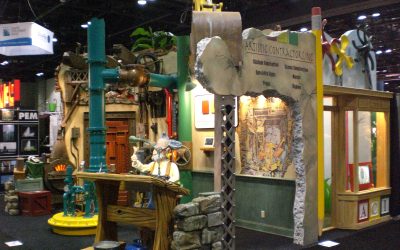
At Artistic Contractors, these questions are resolved during design and material specification, before fabrication begins, on every project regardless of scale. Our work for major theme park operators, international resorts, and cruise lines is built to the standard those clients require: environments that perform structurally and visually not just on opening day, but for the full operational life the client is planning around. Whether the project involves large-scale custom sculptures and themed props exposed to direct outdoor conditions or a complete immersive themed environment intended to operate continuously for a decade or more, the same underlying discipline applies: specify correctly for the actual climate and actual use conditions the structure will face, and engineer maintenance access into the design from the beginning rather than solving it after the fact.
If your project needs to perform in a coastal climate, withstand continuous guest interaction, and still look the way it was designed to look years after installation, we would welcome the conversation.
Artistic Contractors Inc. is a world-class themed environments and custom fabrication company headquartered in Atlantic Beach, Florida. We design and build durable, code-compliant themed attractions, sculptures, and immersive environments for theme parks, resorts, cruise lines, and entertainment venues across North America, the Caribbean, and internationally. Contact us at (904) 853-6853 or visit artisticcontractors.com to discuss your next project.